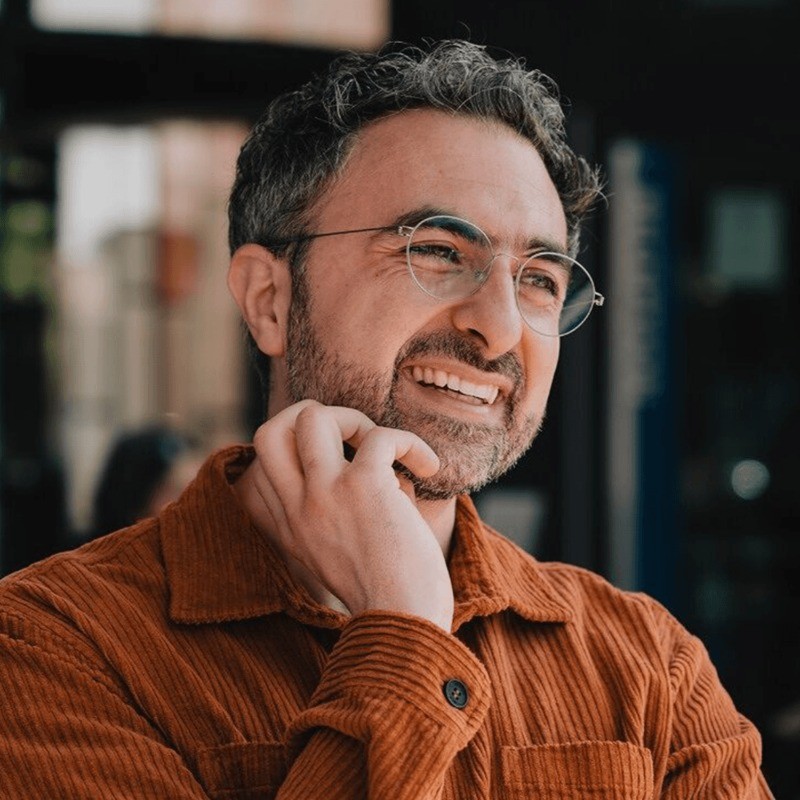
CEO of Microsoft AI, co-founder of DeepMind and Inflection AI. Overseeing Microsoft's Copilot products and AI integration across the Microsoft consumer and enterprise product stack.
Suleyman wrote the book on why AI needs containment, then took the job that requires deploying it at maximum scale across Microsoft's billion-user product surface. The tension is the point: he's betting that responsible deployment at scale is more impactful than academic caution from the sidelines. But the real test is whether his safety instincts survive contact with Satya Nadella's revenue targets. If Copilot becomes the default enterprise AI layer, Suleyman will have more influence over how a billion people experience AI than anyone outside of OpenAI.
Since I began work on AI in 2010, training compute for frontier models has grown by one trillion times. Now we're looking at something like another thousand-fold growth in effective compute by the end of 2028. 1000x the existing 1,000,000,000,000x. Extraordinary stuff.
AIs increasingly simulate more and more of the key hallmarks of conscious beings. This represents a significant threat to social relations as we know them today. Despite the high stakes, Seemingly Conscious AI is a deeply under-studied field of research. Today my team is publishing the first comprehensive review of what drives the perception of SCAI, what risks it poses, and how likely those risks are. We set out to answer three questions: 1) What drives people to attribute consciousness to AI? 2) What risks for both individuals and society does Seemingly Conscious AI create? 3) What risks are most or least likely to actually occur? Our analysis found 5 key hallmarks that drive people to perceive AI as conscious: - Affective capacity: when AI appears to have feelings or suffer pain. - Anthropomorphic features: when AI has a name, gendered identity, aspects of a human appearance like eyes, or other human-like elements. - Autonomous Action: when AI takes self-directed actions or independently takes initiative. - Self-reflective behavior: when AI shows metacognition, or thinking about its own thinking. - Social-interactive behavior: when AI follows human social norms like turn-taking in conversation or making gestures. Next we analyzed the risks of SCAI once that perception is established - both at the individual level and at the societal scale. Some risks could affect users actually interacting with the systems, like emotional dependence, while others, like political strife, could harm even those who aren't users. While the societal risks are more speculative, their severity is very high. These are not abstract, future concerns. AI systems already generate text that appears to express emotions or reflections on internal states. We need to be paying attention and acting now. Huge thanks to Ben Bariach, Philipp Schoenegger, and Michael Bhaskar for driving this critical work. Much more to come. Full paper live now: https://lnkd.in/dRz8ufwv
Our paper landed in Nature Health today! Healthcare is one of the most high-stakes, high-potential applications of AI. So we set out to understand how people actually use it in our AI products today. Using eyes-off, privacy-protecting analysis techniques, the team studied over 600,000 health-related Copilot conversations to understand what kinds of questions people asked, when, and for whom. One interesting insight that struck me is that a lot of questions are actually about friends and loved ones. About 1 in 7 questions about symptoms and conditions are asked about someone else, such as a child, an aging parent or a partner. So we can't just think of personalization as care for the user but helping them support and care for their loved ones too. A caregiver asking about an infant’s or an elderly relative’s symptoms may need different information, different contextual cues and different follow-up recommendations than someone asking about their own. Full read here: https://lnkd.in/giyCztGV Super proud of the work that went into this. These insights could have important implications for how we and the industry design these tools - making sure what we build is what people actually need. Another important milestone for Microsoft AI, and proud of the group behind it - including Beatriz Costa Gomes, Pavel Tolmachev, Eloise Taysom, Viknesh Sounderajah, and many others across the Futures team, data science, Health team, and more.